 Skip to content
Growing Apricots at Home: From Planting to Harvesting
Specification Details Plant Type Deciduous fruit tree, Genus Prunus Family Rosaceae (Rose family) Growth Habit Spreading, rounded canopy; requires annual
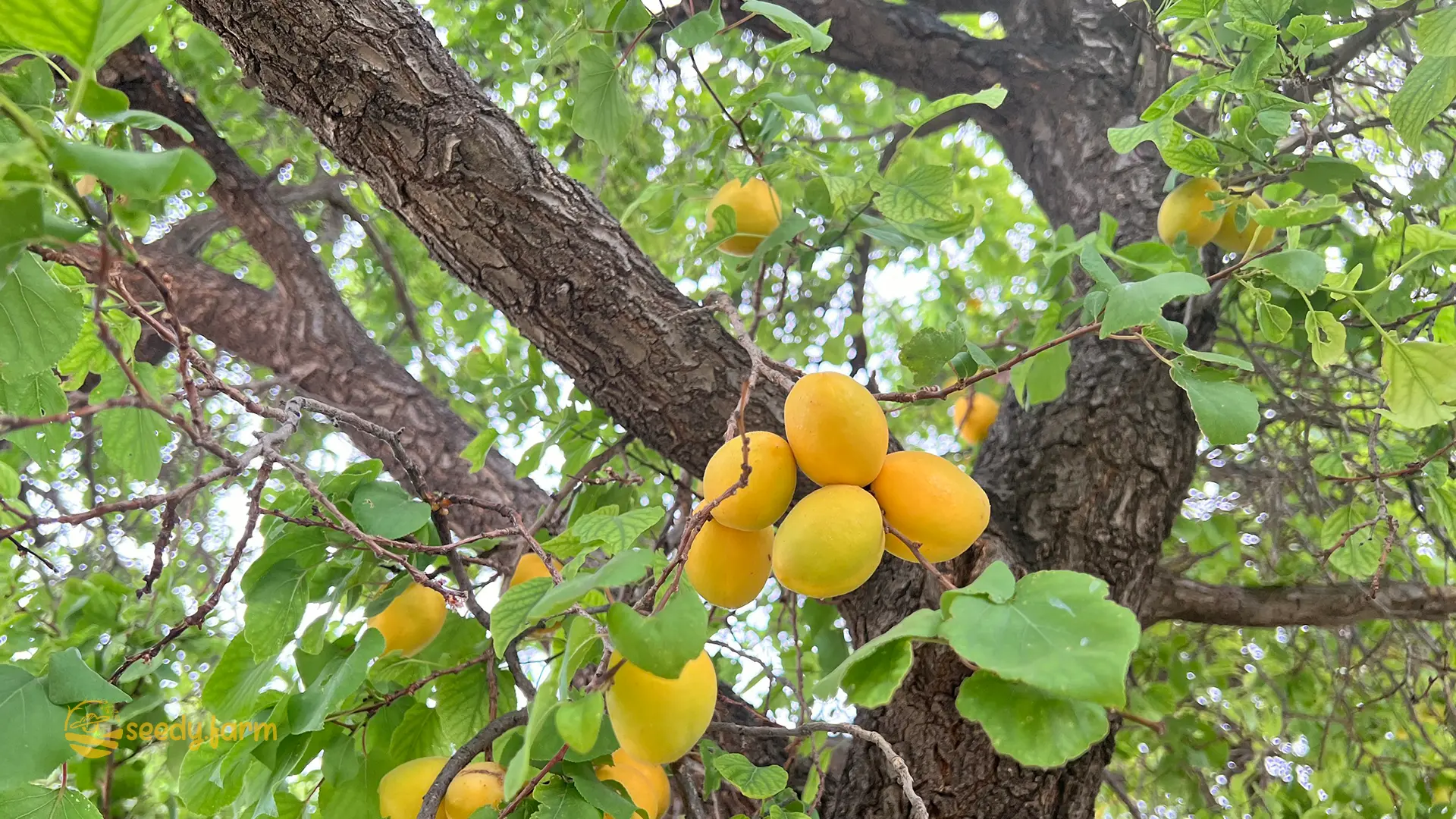
| Specification | Details |
|---|---|
| Plant Type | Deciduous fruit tree, Genus Prunus |
| Family | Rosaceae (Rose family) |
| Growth Habit | Spreading, rounded canopy; requires annual pruning |
| Mature Height | 15-25 feet (4.5-7.6 m) standard; 8-12 feet (2.4-3.6 m) on dwarfing rootstock |
| Sunlight Requirements | Full sun (minimum 6-8 hours of direct, unobstructed sunlight per day) |
| Soil Requirements | Well-drained loam; tolerates a range but dislikes heavy, waterlogged clay. pH 6.5-7.5. |
| Water Needs | Moderate; deep, infrequent watering is best. Drought-tolerant once established. |
| Temperature Range | Hardy in USDA Zones 5-9, but variety-specific. Early blooms are vulnerable to late frosts. |
| Planting Time | Dormant season (late winter or early spring) |
| Spacing | 20-25 feet (6-7.6 m) for standards; 10-15 feet (3-4.5 m) for dwarfs |
| Pollination | Most varieties are self-fertile, but yields improve with a second compatible variety nearby. |
| Fruit Maturity | Early to mid-summer, highly dependent on cultivar and climate |
| Pruning | Annually during dormancy to maintain structure, air circulation, and fruit production. |
| Chilling Requirement | 300-1000+ hours below 45°F (7°C) needed to break dormancy and set fruit. Match this to your local climate. |
I. Choosing and Buying the Right Apricot Tree
1. Selecting the Right Variety
Success begins with the right tree. Your selection must match your climate’s winter chill, disease pressures, and available space. A well-chosen variety will thrive; a poor choice will struggle regardless of care.
a. Suitable Apricot Varieties for Home Gardening
- ‘Patterson’ – A reliable, heavy-bearing variety known for large, firm, flavorful fruit. Its relatively compact size makes it a good fit for home gardens. Excellent for fresh eating, canning, and drying. Requires 500 chill hours.
- ‘Tilton’ – A very cold-hardy variety, making it a dependable choice for cooler climates (Zone 4-5). The fruit is heart-shaped, sweet, and excellent for canning. A late bloomer, which helps it avoid some late frosts. Requires 600 chill hours.
- ‘Blenheim’ (‘Royal Blenheim’) – Considered one of the most flavorful apricots, with a rich, aromatic taste. It is fantastic for fresh eating and drying. However, it blooms very early, making it highly susceptible to frost damage in many regions. Best for climates with mild springs, like parts of California. Requires 400 chill hours.
- ‘Montrose’ – A tough, late-blooming variety that is very cold hardy and more tolerant of spring frosts than many others. It produces sweet, flavorful, red-blushed fruit and is a reliable choice for challenging climates. Requires 700 chill hours.
b. Rootstock Choices
The rootstock is the foundation of your tree, controlling its ultimate size, disease resistance, and soil tolerance. The apricot variety (the scion) is grafted onto this root system.
- ‘Marianna 2624’ – A semi-dwarfing rootstock that confers tolerance to heavy, wet soils where other rootstocks would fail from root rot. An excellent choice for gardens with clay soil.
- ‘Krymsk 86’ – A vigorous rootstock that provides excellent anchorage and is highly tolerant of both drought and heavy soils. It is also resistant to root-knot nematodes, a common soil pest. A robust, adaptable choice.
- ‘Myrobalan 29C’ – A vigorous, standard-sized rootstock known for its wide adaptability to different soil types and its resistance to root-knot nematodes and oak root fungus. A very common and reliable choice.
2. Buying an Apricot Tree
Purchase from a reputable nursery to ensure a healthy, correctly labeled tree. This is an investment that will last for decades.
a. Best Time to Buy
The ideal time to buy is in late winter or early spring when nurseries offer bare-root dormant trees. These trees are dug from the field while dormant, making them lightweight, less expensive, and quicker to establish in your garden with minimal transplant shock. Potted trees are a fine alternative if purchased in spring.
b. Inspecting the Tree Before Purchase
A few minutes of inspection prevents years of problems.
- Healthy Roots: For bare-root trees, the root system should be fibrous and flexible, not dry, brittle, or circling. Healthy roots are typically light-colored. For potted trees, check the drainage holes for a dense mass of circling roots, which indicates it is root-bound.
- Solid Graft Union: Find the graft union—a slight swelling or crook on the lower trunk. It must be fully healed, solid, and free of cracks, weeping sap, or dead tissue. This connection is vital.
- Overall Health: The trunk and branches should be firm and free of wounds, cankers (sunken, dead areas), or signs of insect borers (holes with sawdust-like frass). A well-branched structure is good, but you will be pruning it for shape after planting.
Mentor’s Corner: Lifespan and Expectations
Unlike a peach or nectarine tree, which might be productive for 15 years, a well-sited and cared-for apricot tree is a long-term companion. It can remain vigorous and productive for 30 to 40 years. Choose your planting spot thoughtfully; this tree will be part of the landscape for a generation.
## II. Propagation Methods
1. Growing from Seed
Mentor’s Guide: An Educational Project, Not a Fruiting Strategy
Growing an apricot from a pit is a wonderful educational project, especially for children. It demonstrates the life cycle of a plant in a tangible way. However, it is not a reliable method for producing fruit.
- Genetic Variability: The tree that grows from a pit will not be a clone of its parent. It is a genetic lottery, and the resulting fruit is often small, sour, or otherwise inferior. It will not be a ‘Blenheim’ just because the pit came from one.
- Long Wait Time: A seedling apricot tree can take 7 to 10 years to produce its first fruit, if it fruits at all.
The Professional Method: For a tree that produces high-quality, predictable fruit in 2-4 years, always start with a grafted tree purchased from a nursery. This guarantees you get the variety and rootstock you chose.
2. Cutting and Grafting
Mentor’s Guide: Understanding Professional Techniques
These methods are how nurseries create the trees you buy. They are reliable in professional hands but challenging for beginners without the right setup.
a. Using Cuttings
Propagating apricots from cuttings is common in online articles but has an extremely low success rate for home gardeners. Apricot wood, especially hardwood cuttings taken in fall, is notoriously difficult to root without a professional misting system and bottom heat to maintain precise temperature and humidity. For the home grower, this method usually results in disappointment.
b. Bud Grafting Techniques
This is the standard horticultural practice for creating fruit trees. A bud (the scion) from a desired variety is surgically inserted onto a compatible rootstock tree. This is a fascinating skill for a dedicated enthusiast to learn, but it requires practice and a source of both rootstock and scion wood. For most gardeners, the practical application of this knowledge is understanding why a purchased tree has a graft union and why it’s so important to protect it.
III. Preparing to Plant
1. Site Selection and Soil Preparation
The right location is non-negotiable. An apricot tree is a long-term investment, and its location will determine its health and productivity for decades.
a. Ideal Location
Select a site with full sun (minimum 6-8 hours daily) and, crucially, good air circulation. Gentle air movement helps dry foliage quickly after rain or dew, which is your single best defense against fungal diseases like brown rot. Avoid low-lying frost pockets where cold air settles. Planting on a gentle slope or near the top of a hill is ideal.
b. Soil Requirements
Apricots demand well-draining soil. They will not tolerate “wet feet” or heavy, compacted clay that stays saturated. The ideal soil is a sandy loam with a pH between 6.5 and 7.5. Before planting, dig a hole 1 foot deep and fill it with water. If it doesn’t drain away within a few hours, your drainage is poor.
c. Preparing the Site
If you have heavy clay, do not simply amend the planting hole with compost. This creates a “bathtub effect” where water collects in the amended soil and rots the roots. Instead, amend a large area (at least 10×10 feet) with several inches of compost, or better yet, build a raised bed or mound at least 12-18 inches high and 4-5 feet wide using a mix of quality topsoil and compost. This raises the root zone out of the soggy ground.
2. Planting Process
a. Timing
Plant bare-root trees in late winter or early spring as soon as the soil can be worked. This allows roots to establish before the tree breaks dormancy and begins its spring growth.
b. Digging the Hole
Dig a hole only as deep as the root ball and two to three times as wide. The goal is to give roots loose soil to expand into sideways, not to encourage them to grow straight down into compacted subsoil. Do not add fertilizer or compost to the bottom of the hole.
c. Placing the Tree
Identify the root flare—the point where the trunk widens and the first major roots emerge. This flare must sit at or slightly above the final soil level. More importantly, locate the graft union (the bump on the lower trunk). Ensure it remains at least 2-4 inches above the soil line. If buried, the scion can sprout its own roots, nullifying all the benefits of the rootstock. Spread the roots out over the soil in the hole.
d. Backfilling and Watering
Backfill the hole using only the native soil you removed. Tamping it down with your foot compacts the soil; instead, water gently as you fill to settle the soil and eliminate air pockets. Once filled, build a shallow soil berm or watering basin around the outer edge of the hole. Fill this basin with water two or three times to deeply saturate the entire root zone.
e. Staking and Protection
Only stake a young tree if it is in a very windy location or the rootball is too small to support it. If needed, use two stakes and flexible, soft ties to allow the trunk to flex, which builds strength. Protect the young trunk from sunscald (winter cracking) with a white tree guard and from rodents or deer with a hardware cloth or wire cylinder.
IV. Caring for Apricot Trees
1. Watering and Irrigation
Correct watering establishes deep, resilient roots.
a. Regular Watering Needs
For the first year, provide deep, consistent watering to ensure establishment. Check the soil weekly; if it’s dry a few inches down, it’s time to water. A newly planted tree may need 5-10 gallons of water per week. Once established (after 1-2 years), apricot trees are quite drought-tolerant, but fruit size and quality depend on adequate moisture during fruit development.
b. Drip Irrigation
A drip irrigation system or soaker hose is the superior method. It delivers water slowly and directly to the root zone, minimizing evaporation and keeping the trunk and foliage dry. This significantly reduces the risk of fungal diseases. The root zone extends to the drip line (the edge of the canopy), so place emitters throughout this area, not just at the trunk.
c. Adjusting Watering Based on Climate and Season
Increase watering frequency during hot, dry spells. Reduce or stop supplemental watering during rainy periods. Always check the soil moisture before watering. Overwatering is a more common cause of death for young trees than underwatering.
2. Fertilizing and Soil Management
Feed the soil, not just the plant. Healthy soil biology is key to nutrient uptake.
a. High Potassium and Phosphorous, Low Nitrogen
Apricot trees require a balanced supply of nutrients, but the ratio is critical. Use a fertilizer low in nitrogen (N) and higher in phosphorus (P) and potassium (K). Potassium (K) is vital for fruit size, flavor, and disease resistance. Phosphorus (P) supports root development and energy transfer. Excess Nitrogen (N) forces lush, weak leafy growth that is attractive to pests like aphids and comes at the expense of flowers and fruit.
b. Organic Fertilizers
A top-dressing of high-quality compost or well-composted manure each spring is often sufficient for a healthy tree. This feeds beneficial soil microbes and provides a slow, balanced release of nutrients. Supplementing with organic sources like bone meal (for phosphorus) or greensand (for potassium) can also be effective.
c. Applying Sulphate of Potash in Spring
If a soil test indicates a potassium deficiency, an application of sulphate of potash in early spring can boost fruit quality. Apply according to package directions around the drip line, not at the trunk, and water it in well.
d. Soil Testing and Amendments
An inexpensive home soil test every few years provides valuable data on pH and nutrient levels, allowing you to fertilize precisely instead of guessing. Apricots prefer a soil pH of 6.5 to 7.5. If your soil is too acidic (low pH), amend with dolomitic lime. If it’s too alkaline (high pH), amend with elemental sulfur.
Mentor’s Corner: The Importance of Chill Hours
Apricot trees require a specific number of “chill hours”—hours below 45°F (7°C) during winter dormancy—to properly break bud and flower in spring. A low-chill variety like ‘Blenheim’ (400 hours) will fail in a cold climate, while a high-chill variety like ‘Montrose’ (700 hours) won’t produce fruit in a warm-winter area. Check your local extension service for average chill hours in your area and choose a variety that matches.
### 3. Pruning and Training
Pruning is not optional; it is essential annual maintenance for tree health and fruit production. Prune during the dormant season (late winter).
a. Pruning for Air Circulation and Sunlight
The primary goal of pruning is to create an open framework that allows sunlight and air to penetrate the entire canopy. This reduces fungal disease, improves fruit color and ripening, and makes spraying and harvesting easier.
b. Thinning Fruit for Better Yield
Apricots often set more fruit than they can support. This leads to small, flavorless fruit and can cause branches to break. When the young fruits are about the size of a marble, thin them to one apricot every 4 to 6 inches along the branch. It feels drastic, but the remaining fruit will be dramatically larger and more flavorful.
c. Shaping Young Trees for Optimal Growth
Train apricot trees to an open-center or “vase” shape. At planting, or in the first dormant season, select 3 to 5 well-spaced scaffold branches radiating from the trunk and remove the central leader (the main upward-growing stem) just above the highest scaffold. This creates the open vase that is the foundation of a healthy, productive tree.
d. Pruning Mature Trees
Each winter, remove about 20% of the previous year’s growth. The focus is on removing:
- Dead, damaged, or diseased wood (the 3 D’s).
- Branches that cross or rub against each other.
- Vigorous, upright shoots (watersprouts) and suckers from the base.
- Any growth pointing back into the center of the tree.
4. Mulching and Weed Control
Mulch is a non-negotiable best practice for fruit trees.
a. Applying Mulch
Apply a 3-4 inch layer of organic mulch, such as wood chips, shredded bark, or straw, in a wide circle around the tree out to the drip line. Critically, pull the mulch back 4-6 inches from the trunk itself to prevent moisture buildup, which can lead to crown rot.
b. Benefits of Woody Mulch
Wood chip mulch is ideal. As it decomposes, it fosters a beneficial fungal network in the soil (mycorrhizae) that helps the tree absorb water and nutrients. It also moderates soil temperature, conserves moisture by reducing evaporation, and suppresses weeds.
c. Weed Control
Grass and weeds are fierce competitors for water and nutrients, especially for young trees. A wide, thick layer of mulch is the most effective and beneficial method of weed control. It eliminates the need for herbicides and protects the tree’s shallow roots from damage by mowers or string trimmers.
The Enemy Below: Grass and Weeds
An apricot tree’s feeder roots are shallow and wide-spreading. Turfgrass growing right up to the trunk will rob a young tree of essential water and nitrogen, significantly stunting its growth. For the first 3-5 years, maintain a grass-free, mulched circle at least 4-6 feet in diameter around your tree.
#### d. Maintaining Mulch
Replenish the mulch layer each spring as it decomposes and settles. This continual addition of organic matter builds rich, healthy soil over time.
V. Enhancing Fruit Production
1. Companion Planting
While not a silver bullet, thoughtful plant placement can support a healthy orchard ecosystem.
a. Beneficial Plants to Grow Nearby
Focus on plants that attract beneficial insects or improve soil.
- Pollinator Attractors: Planting herbs like borage, lavender, and oregano, or flowers like cosmos and sweet alyssum nearby will draw in bees and other pollinators, improving fruit set.
- Dynamic Accumulators: Comfrey is a classic example. Its deep taproot mines nutrients from the subsoil, which can be “chopped and dropped” as a nutrient-rich mulch around the tree.
- Nitrogen Fixers: A groundcover of clover or vetch can fix atmospheric nitrogen in the soil, providing a gentle, continuous supply of this essential nutrient to the tree.
b. Plants to Avoid Near Apricots
Avoid planting anything that will compete directly for water and nutrients within the tree’s root zone, especially other heavy feeders. Keep potatoes and tomatoes at a distance, as they can share diseases like Verticillium wilt, although this is a lower risk for apricots than for other stone fruits.
2. Pollination
No pollination, no fruit. It’s that simple.

a. Self-Fertility of Most Apricot Varieties
Most apricot cultivars are labeled self-fertile, meaning a single tree will set fruit. However, even self-fertile varieties produce significantly heavier and more reliable crops when another, different apricot variety is planted nearby for cross-pollination.
b. Benefits of Having Multiple Trees or Grafting Different Varieties
Planting two varieties that bloom at the same time is the best strategy for maximizing yield. If space is limited, you can purchase a tree with multiple varieties already grafted onto it, or you can learn to graft a branch from a different variety onto your existing tree. This ensures a pollination partner is always just a few feet away.
3. Seasonal Tips
A simple checklist for a healthy tree year-round.
a. Spring
- Dormant Spray: Just before buds swell, apply a dormant oil to smother overwintering pest eggs (like aphids and mites) and a copper-based fungicide to prevent diseases like shothole.
- Fertilizing: Apply compost and any necessary mineral amendments around the drip line as growth begins.
- Frost Protection: Be prepared to cover smaller trees with a frost blanket if a late frost threatens after flowers have opened.
b. Summer
- Watering: Ensure consistent, deep watering as fruits swell to maximize size and prevent splitting.
- Thinning: Thin excess fruit when marble-sized for a better quality harvest.
- Summer Pruning: Remove any vigorous, unwanted watersprouts to maintain light penetration.
- Harvest: Pick fruit as it ripens to prevent it from attracting pests like yellow jackets and earwigs.
VI. Managing Pests and Diseases
The best approach is proactive prevention, known as Integrated Pest Management (IPM). This prioritizes cultural health, sanitation, and least-toxic controls.
1. Common Diseases
a. Shothole
Caused by the fungus Wilsonomyces carpophilus, this appears as small, reddish-purple spots on new leaves that fall out, leaving a “shothole” appearance. It can also infect fruit and twigs.
- Prevention: Prune for excellent air circulation. A dormant season spray with a fixed copper or Bordeaux mixture fungicide is highly effective. Rake up and destroy infected leaves in the fall.
b. Gummosis (Cytospora Canker)
This is the oozing of amber-colored sap from the bark. It is a symptom of stress, often caused by injury, sunscald, insect borers, or a canker fungus like Cytospora.
- Management: Prevention is key. Avoid mechanical injuries from mowers or string trimmers. Protect trunks from winter sunscald with a tree guard. During dry summer weather, surgically remove cankered, dead wood by cutting back to healthy tissue. Do not fertilize a stressed tree with high-nitrogen fertilizer.
c. Brown Rot
This devastating fungus (Monilinia fructicola) attacks blossoms, causing them to wither, and later infects fruit, causing it to rot and mummify on the branch.
- Prevention: Sanitation is paramount. Remove all mummified fruit from the tree and the ground during winter. Prune for air circulation. Fungicide sprays (e.g., sulfur or synthetic options) are often necessary at bloom time in humid climates.
2. Common Pests
a. Peach Twig Borer
The larvae of this moth bore into new shoots, causing them to wilt (“flagging”), and later attack the fruit, often near the stem.
- Control: Mating disruption with pheromone ties is a highly effective, non-toxic strategy. Timed sprays of Bacillus thuringiensis (Bt) or spinosad at petal fall can control larvae. Dormant oil sprays help smother overwintering stages.
b. Spider Mites
These tiny arachnids cause stippling (fine yellow dots) on leaves and, in heavy infestations, fine webbing. They thrive in hot, dusty conditions.
- Management: A sharp spray of water can dislodge them. Encourage predatory mites by avoiding broad-spectrum insecticides. If necessary, use horticultural oil or insecticidal soap, ensuring complete coverage of the undersides of leaves.
c. Earwigs
These nocturnal insects can chew holes in ripening fruit.
- Control: They are attracted to decaying matter and moisture. Keep the base of the tree clean and dry. A simple trap can be made by rolling up damp newspaper and placing it near the trunk overnight; dispose of the trapped earwigs in the morning.
d. Aphids
These small, sap-sucking insects cluster on new growth, causing leaves to curl and producing sticky “honeydew.”
- Control: A strong jet of water can knock them off. Encourage beneficial insects like ladybugs and lacewings, which are voracious aphid predators. If needed, apply insecticidal soap directly to the colonies.
VII. Harvesting and Storing Apricots
1. Harvesting Techniques
a. Timing
Apricots ripen from early to mid-summer. They do not ripen all at once; plan to harvest every few days for one to two weeks. The fruit develops some sweetness off the tree, but the best flavor develops on the branch.
b. Identifying Ripe Fruits
Rely on multiple senses:
- Color: The fruit’s background color should change from green to a uniform yellow-orange. The reddish blush is not always an indicator of ripeness.
- Texture: A ripe apricot yields to gentle pressure from your thumb. It should feel firm-ripe, not soft or mushy.
- Aroma: A truly ripe apricot has a rich, sweet fragrance.
- Release: The fruit should detach from the branch with a slight twist. If you have to pull hard, it’s not ready.
c. Harvesting Methods
Handle the fruit with care to avoid bruising.
- Hand-Picking: This is the best method. Gently cradle the fruit and twist. Place it carefully in a shallow basket or tray, not a deep bucket where the fruit on top will crush those below.
- Harvesting for Storage: If you plan to can or preserve, you can pick the fruit when it is slightly less ripe (firm-ripe), as it will hold its shape better during processing.
Extend Your Harvest
One of the best ways to get a longer harvest season from a small space is to graft multiple varieties onto one tree. By grafting an early-season, mid-season, and late-season variety onto a single rootstock, you can be picking fresh apricots for over a month from just one tree.
### 2. Storing and Preserving Apricots
Fresh-picked apricots have a short shelf life, so have a plan for your harvest.
a. Short-Term Storage
- Room Temperature: Store firm-ripe apricots on the counter, in a single layer, out of direct sun. They will soften and be ready to eat in 1-3 days.
- Refrigeration: Once fully ripe, move them to the refrigerator in a vented plastic bag. They will keep for 3-5 days. Cold temperatures halt ripening and preserve quality.
b. Long-Term Preservation
- Freezing: This is the easiest way to preserve their fresh flavor. Wash, halve, and pit the apricots. To prevent browning, dip them in a solution of lemon juice and water. Flash freeze them in a single layer on a baking sheet before transferring them to freezer bags. They are excellent for smoothies, baking, and sauces.
- Dehydration: Drying concentrates the flavor and sugars, creating a delicious snack. Halve and pit the fruits, then dry them in a food dehydrator or an oven on the lowest setting until leathery and pliable. Store in an airtight container.
- Canning and Jams: Apricots are a classic fruit for canning in light syrup or making into jams, butters, and preserves. Always use up-to-date, tested recipes from a reliable source like the National Center for Home Food Preservation to ensure safety.
VIII. Troubleshooting and FAQ
Even well-cared-for trees can have problems. Here’s how to diagnose them.
1. Common Issues
a. Symptom: Fruit Splits Open on the Tree
- Likely Cause: A sudden influx of water after a dry period. The fruit’s skin can’t expand as fast as the flesh swells.
- Solution: Maintain consistent soil moisture throughout the fruit development period with deep, regular watering. A thick layer of mulch is critical for moderating soil moisture levels.
b. Symptom: Blossoms or Tiny Fruits Drop After a Cold Night
- Likely Cause: Frost damage. Apricot blossoms are very sensitive to temperatures at or below freezing.
- Solution: Site selection is the best prevention. Avoid low-lying frost pockets. For smaller trees, covering them with a frost cloth or blanket before a predicted frost can save the crop.
c. Symptom: Leaves are Yellow, but Veins Remain Green (Interveinal Chlorosis)
- Likely Cause: Iron deficiency, typically caused by high soil pH (alkaline soil) which makes iron unavailable to the plant.
- Solution: A soil test can confirm pH. A short-term fix is a foliar spray with chelated iron. The long-term solution is to lower the soil pH by applying elemental sulfur according to soil test recommendations.
2. Frequently Asked Questions
a. Where Do Apricot Trees Grow Best?
They thrive in climates with moderately cold, dry winters and warm, dry summers, such as those found in USDA Zones 5-8. High humidity during the growing season promotes fungal diseases, and a lack of winter chill will prevent fruiting.
b. Do You Need Two Apricot Trees to Produce Fruit?
Technically no, as most varieties are self-fertile. However, fruit set, yield, and sometimes fruit size are significantly improved with a second, different apricot variety blooming nearby for cross-pollination. It is highly recommended.
c. How Big Does an Apricot Tree Grow?
A standard tree will reach 20-25 feet tall and wide. A tree on a semi-dwarfing rootstock (the most common type at nurseries) will mature around 12-18 feet. True dwarf varieties stay under 10 feet and are suitable for containers.
d. Do Apricot Trees Grow Fast?
Yes, they are vigorous growers, especially when young. A healthy, well-cared-for tree will typically begin to bear a light crop within 2 to 4 years of planting.
e. Why Are My Apricot Leaves Turning Yellow?
The most common cause is overwatering or poor drainage, which suffocates roots. Other causes include nitrogen deficiency (uniform yellowing, starting with older leaves) or iron deficiency (yellowing between green veins on new leaves). Always check soil moisture before diagnosing a nutrient issue.
f. What Should I Do If My Apricot Tree Isn’t Flowering?
This can be due to several factors: 1) The tree is too young (give it 3-4 years). 2) Insufficient chill hours for the chosen variety. 3) Excessive nitrogen fertilizer promoting leaf growth over flowers. 4) Improper pruning that removed all the fruiting wood.
g. Can I Grow Apricots in a Container?
Yes, but you must choose a true dwarf variety on a dwarfing rootstock. Use a large pot (minimum 20-25 gallons) with excellent drainage holes. Container-grown trees require more frequent watering and fertilizing than in-ground trees.
h. How Do I Know When to Harvest Apricots?
Do not rely on color alone. The best indicators are a combination of factors: the fruit yields to gentle thumb pressure, it detaches easily with a slight twist, and it has a rich, sweet aroma. Taste one to be sure
Comments (0)
No comments yet. Be the first to share your thoughts.